AppLHy: Validating the entire liquid hydrogen supply chain

The research activity investigates the provision, storage, transport and use of liquid hydrogen (LH₂). One research focus at ITEP is the potential synergy of cryogenic liquid hydrogen with superconducting components, drive systems and conductors.
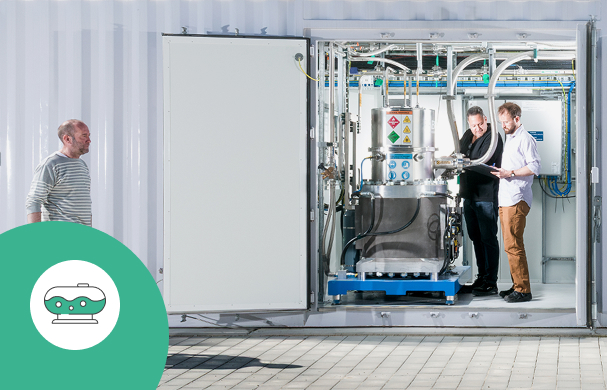
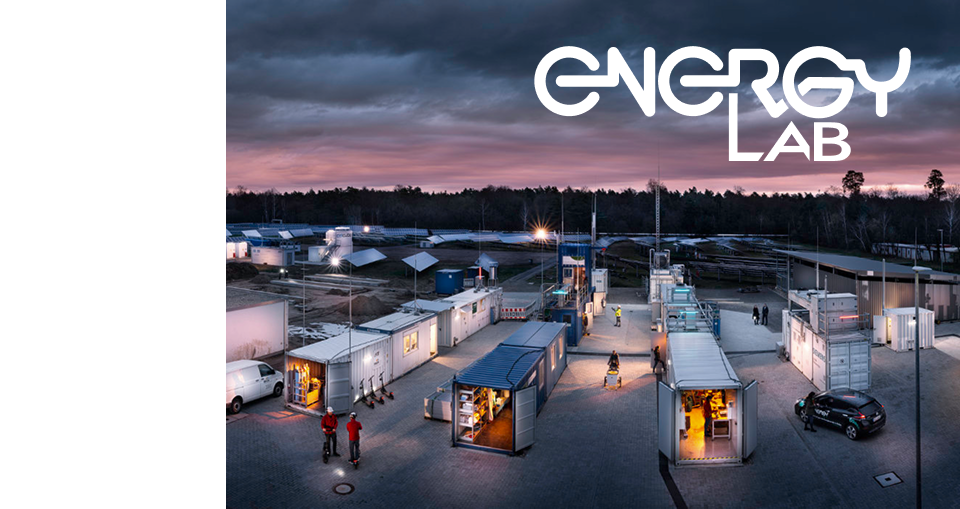
Researchers working on a hydrogen liquefier in a technical facility as part of the Energy Lab HIP AppLHy research activity.


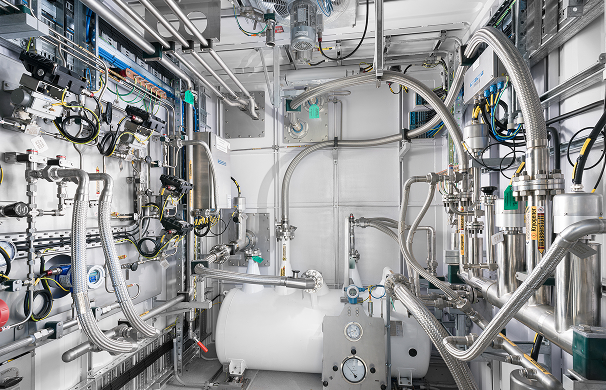
Innenansicht einer AppLHy-Anlage mit technischem Wasserstoffsystem, Leitungen und Prozessbehälter.


The collaborative AppLHy research activity, part of the now completed TransHyDE flagship project, demonstrates the liquefaction of hydrogen as well as the transport, storage and use of liquid hydrogen (LH₂). In addition, the facility will provide LH₂ for other users on KIT Campus North and is connected to the Energy Lab infrastructure network.

The first targeted system is a hybrid energy pipeline that transports electrical power and liquid hydrogen in a unique, compact transfer pipeline.

A construction site next to solar panels, with earthwork, construction vehicles, a surveying tripod, and containers in front of a grove of trees.
July 2025

Here we go! Work on the foundations for the HIP/AppLHy! infrastructure has begun.

A construction site with a gravel area, a road roller, an excavator, solar panels, and caution tape in the foreground.
August 4, 2025

The Hydrogen Integration Platform (HIP) is a new research infrastructure designed to integrate hydrogen technologies into real-world power grid environments.

A construction site with a gravel area, a yellow van, an excavator, caution tape, and solar panels in the background.
September 1, 2025

Construction work on the Hydrogen Integration Platform continues. In addition, we are beginning to expand our staff this month. Today we welcome two new employees to the institute, who will take on the first operational tasks. We are very pleased to have Marko Hartstern and Tobias Wagenbach on board and look forward to seeing them tackle their first practical assignments.

Construction site with a gravel area, excavations, a concrete foundation, a mobile excavator, and solar panels in the background.
September 8, 2025

DConstruction work on the HIP project continues: The first section of the foundations is now complete. The next step is to erect the steel girder structure for the hydrogen pipelines. Meanwhile, the completed liquefier is in Christchurch, New Zealand. Following the final factory tests at the end of September, it will embark on a two-month voyage by ship to Germany. We therefore expect delivery by the end of the year and commissioning in Q1 2026.

A construction site with concrete foundations, construction equipment, and workers in front of solar panels, accompanied by a small FABRUM photo.
October 2025

While construction work is progressing in Karlsruhe, the new hydrogen liquefier for the AppLHy! project has been successfully tested and accepted in New Zealand. The unit, built by Fabrum, is now being shipped from Christchurch and will arrive here in a few weeks. Once the liquefier is installed and begins operation (Q1 2026), it will produce up to 75 kg of liquid hydrogen per day. This will supply various projects at ITEP, in particular the TransHyDE AppLHy! project, as well as, if necessary, other KIT institutes and partner companies. Special thanks go to Michael Wolf, Tobias Wagenbach, and Marco Hartstern, who oversaw this important step on site.

A construction site with solar panels in the background, a gravel surface, and two construction workers in yellow safety vests.
October 2025

The condenser is continuing its journey and will arrive in Germany in early December and at our institute a few days later. Meanwhile, everything is being prepared at our construction site: The foundation work is almost complete; all that’s left is the sealing to get everything ready for the new systems.

Construction site with exposed concrete foundations, steel rebar, construction equipment, and construction workers on a gravel surface.
October 2025

The metal poles protruding upward in the picture mark the connection points for gas lines, which will be delivered and connected shortly.

A construction site with excavators and construction workers laying the foundations in front of rows of solar panels.
November 3, 2025

The pouring of the foundations is complete, and the surface has been compacted. The concrete foundations ensure the earthquake-resistant installation of 20-foot containers, and the steel structure provides the basis for a hydrogen pipeline network that connects the HIP facilities to the rest of the Energy Lab complex. The next step will be to install the paving stones and grass pavers.

A white utility container is being placed on the construction site by a crane; solar panels and container buildings are visible in the background.
January 20, 2026

A few days ago, the core component of our new facility—which liquefies over 50 kg of hydrogen daily—was installed at KIT. Germany’s largest non-commercial liquefier supports the Hydrogen Integration Platform (HIP) and enables tests, for example, on the combination of liquid hydrogen and superconductivity. The system, manufactured by Fabrum, will supply liquid hydrogen for research at Campus North and for external projects. It was shipped from New Zealand to Karlsruhe.

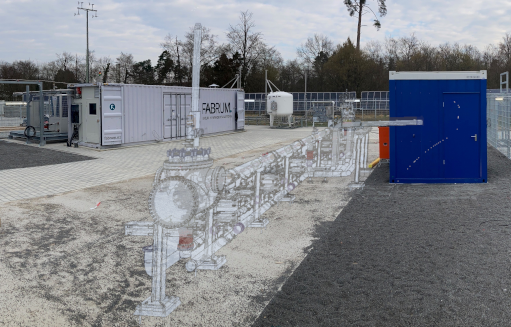
A completed hydrogen plant featuring a FABRUM container, an open technical station, and a visible liquefaction system.
April 2026

The new condenser is fully connected and ready for operation; the final technical inspection by TÜV is currently underway.


Infrastructure

Außenansicht eines FABRUM-Containers für Flüssigwasserstoff mit geöffneter Technikstation und sichtbarer Anlage.


The core component of the currently installed system is a hydrogen liquefier with a capacity of 50 kg of hydrogen per day. Liquid hydrogen can be filled from the LH₂ storage tank into mobile transport containers for use in further research activities.

In a second construction phase, a 16-metre demonstration pipeline will be built to demonstrate the combined transmission of LH₂ and electrical power in a superconducting cable.


More HIP projects

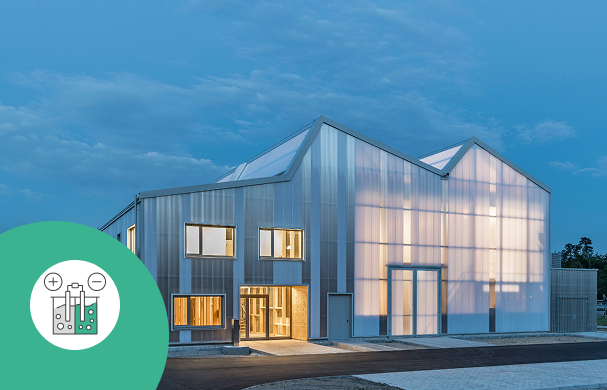
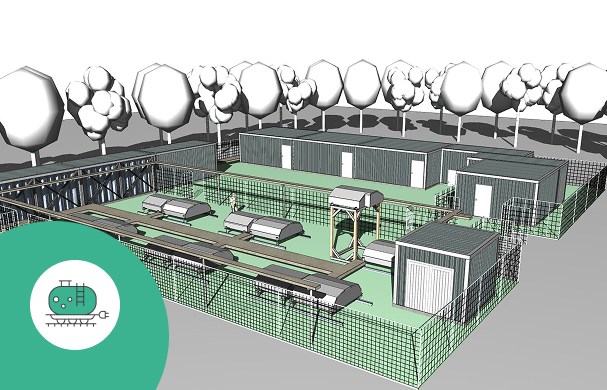
Energy Lab building at dusk with an AEM electrolyser icon.

AEMflex

AEMflex develops and validates a modular 200 kW AEM electrolyser for the flexible, efficient and grid-oriented production of green hydrogen under realistic conditions.
Learn more

H₂Rail

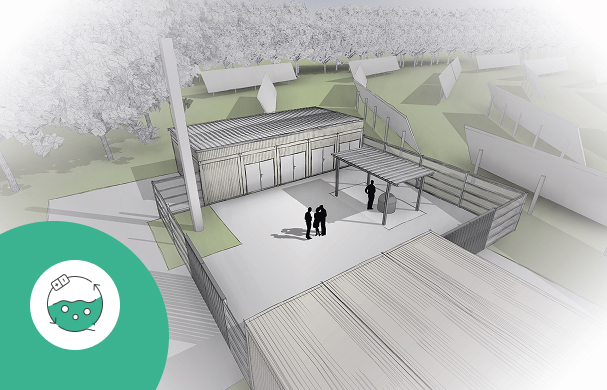
H₂Rail realistically simulates a hydrogen powered locomotive in order to test fuel cells, batteries and energy management directly in the train.
 

Learn more

Architectural rendering of the H₂-in-the-Loop facility with a hydrogen technology icon.

H₂-in-the-Loop

H₂-in-the-Loop tests hydrogen-powered hardware under simulated power grid conditions in order to identify technical errors earlier and under more realistic conditions.

Learn more

Partner organizations


Contacts

Portrait of Michael Wolf
Michael Wolf

Project Lead AppLHy

 +49 721 608-24118
 michael.wolf∂kit.edu

Portrait Tabea Arndt
Prof. Tabea Arndt

ITEP-Director

 +49 721 608-23515
 tabea.arndt∂kit.edu

Do you have any questions about the project?

Our representatives will be happy to assist you and are available to answer your questions personally. Alternatively, simply use the contact form so we can forward your inquiry directly to the right department.

Get in touch