H₂Rail: Hydrogen-Powered Railway Laboratory
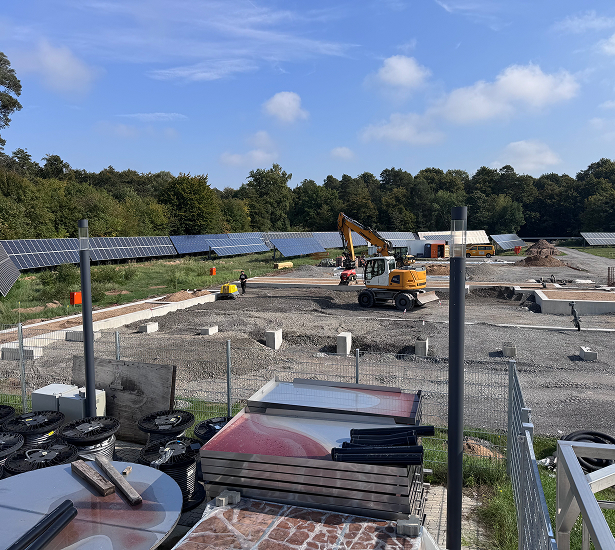
The H2Rail research project is a transfer-to-industry project that investigates the drive train of a hydrogen-powered locomotive, consisting of fuel cells and batteries. Various fuel cell and battery configurations, as well as new prototypes for energy management, can be implemented directly on the train and tested in real time, for example under simulated climate conditions or gradient profiles.
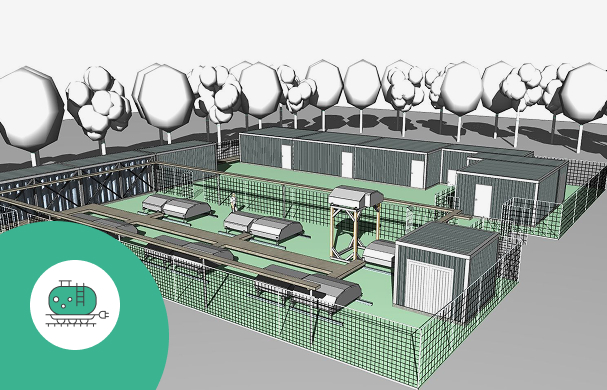
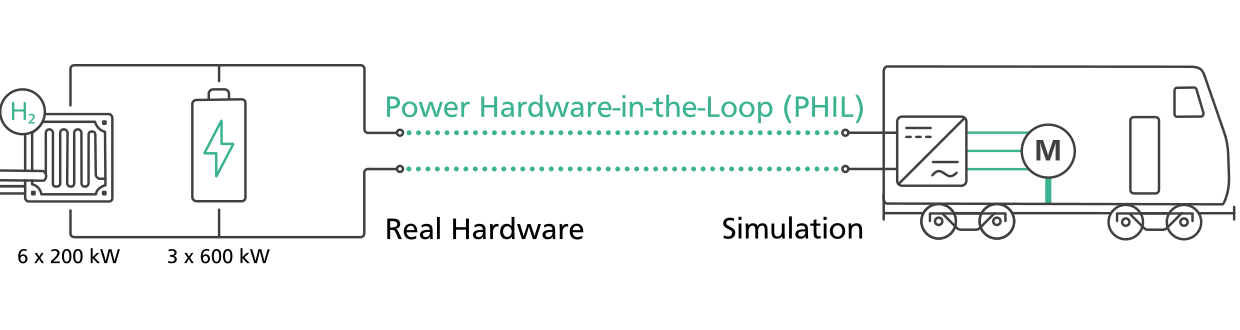
H2Rail bridges the gap between real hardware and a simulated environment. This makes experiments possible, that would otherwise be a cost-intensive trial-and-error approach: Investigating the first hydrogen powered locomotive. What interests us most in this area is the synergy of multiple fuel cell systems and battery systems on the vehicle, while in motion across long distances, different climate zones and inclines.
With the installation of six fuel cell systems, while usually one is sufficient for a small train, the power supply system is completed through the addition of three battery systems. This hybrid traction concept has the power rating of a modern diesel locomotive, which is the type of vehicle that is to be replaced in the future.
The H2Rail facility makes it possible to investigate hydrogen powered railway vehicles through their paces. Countless different configurations of fuel cells and batteries are easily realized, in addition to test runs of new prototypes from the industry. The whole drive train and also the track profile is completely simulated, so trial runs across far away continents are no longer a problem. Since batteries also suffer from extreme climates, that can easily be reproduced on-site.
As soon as the first hydrogen powered locomotive is placed on the tracks, H2Rail has made a contribution to the transport transition, an integral part of the energy transition.



“With H₂Rail, we are entering previously unknown territory: hydrogen-powered locomotives with real fuel cells and a simulated drivetrain. Power Hardware-in-the-Loop makes this possible.”

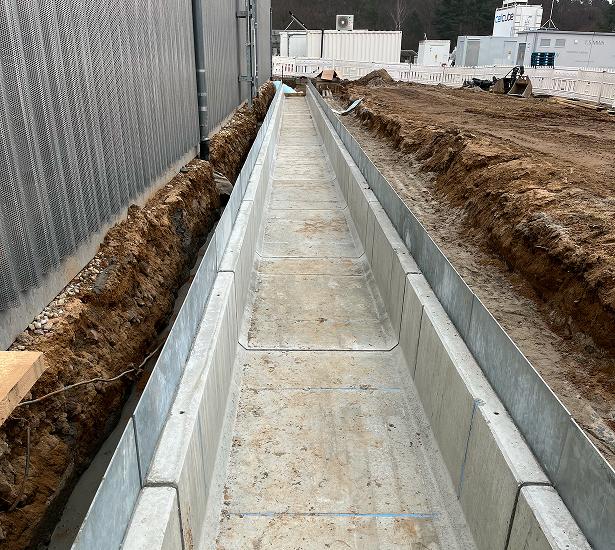
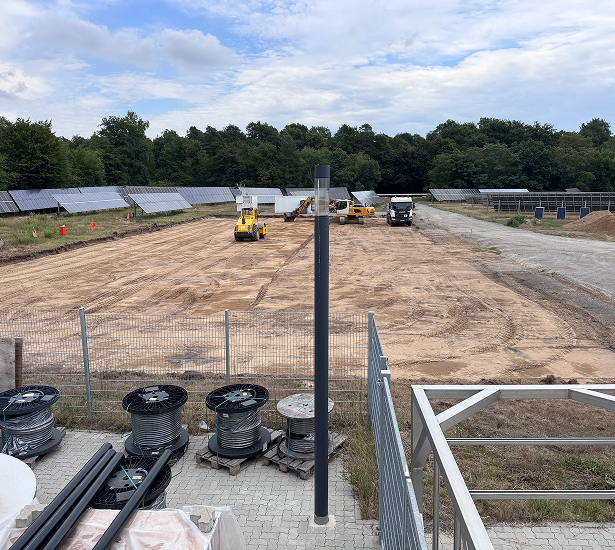
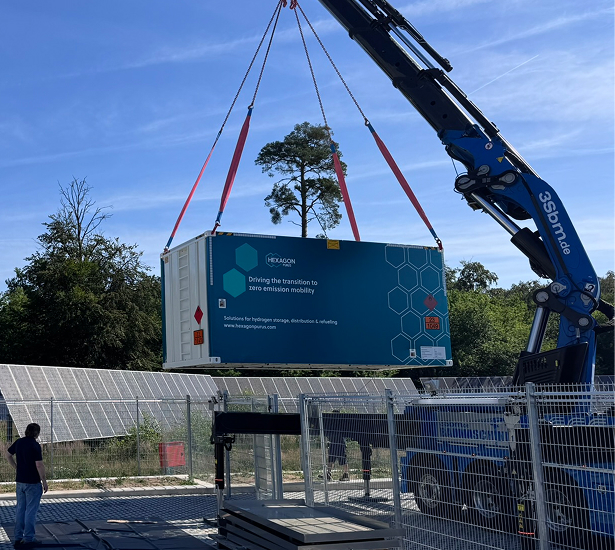
Locally produced hydrogen, sourced from experimental electrolysis, is transported to the H2Rail lab through pipelines, and will then be compressed on-site. This fuel is then stored under high pressures of 350 bar in carbon fiber (type IV) gas tanks, equivalent to the tank on a locomotive. The six fuel cell modules with a rated output power of 200 kW each are being simultaneously supplied from the tank and feed electric energy into a DC link. The three battery systems with a rated power of 600 kW each are also connected to that DC link. This allows for supplying additional power for acceleration and the recovery of braking energy. Underground cables connect the DC link with the Power Hardware-in-the-Loop system inside the SEnSSiCC building of the Energy Lab. This is where the entire railway vehicle is simulated in real time.
AppLHy
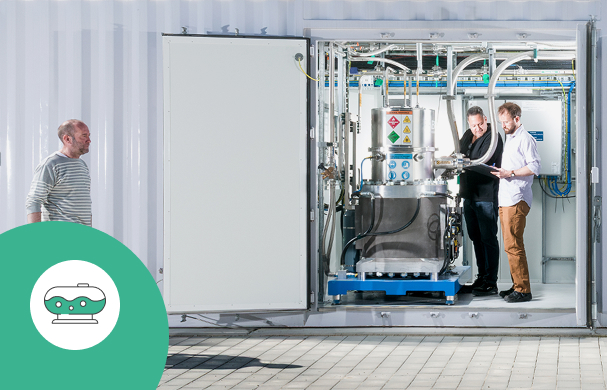
AppLHy explores how liquid hydrogen can be provided, stored and used, including in combination with superconducting components and drives.
AEMflex
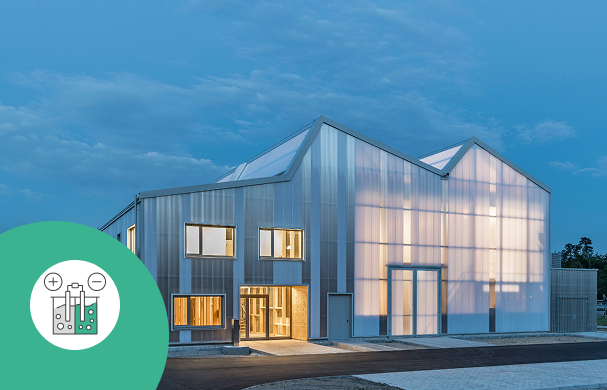
AEMflex develops and validates a modular 200 kW AEM electrolyser for the flexible, efficient and grid-oriented production of green hydrogen under realistic conditions.
H₂-in-the-Loop
H₂-in-the-Loop tests hydrogen-powered hardware under simulated power grid conditions in order to identify technical errors earlier and under more realistic conditions.